Yes, you can send flowers to a hospital or private clinic in Switzerland, and a well-addressed bouquet usually arrives without trouble. Delivery is to the front desk or reception, from where staff take it to the ward. What matters is the patient’s full name, the ward if you know it, and a quick check that the ward accepts flowers.
How hospital delivery works
Hospitals are busy, secure buildings. A courier will normally hand the bouquet to the main reception or a dedicated desk, not walk the corridors looking for a room. KANEL delivers to the front desk of hospitals, which is the standard approach.
From there, hospital staff pass it on. That second step depends entirely on what you wrote on the order, so think of the address as instructions for the person at the desk:
Ms Anna Rossi (patient)
Ward / unit: Orthopaedics, 5th floor, room 512
Hôpital ... [hospital name]
Street and number
Postcode and town
If you do not know the room, the ward or department is enough for most front desks. If you know neither, the full name and date of birth are what reception would look up, but hospitals may not give out patient details over the phone, so ask a relative rather than the hospital.
Write “patient” after the name. In a large hospital, staff and patients can share a surname, and it saves the reception desk a question.
Check these four things before ordering
- Is the patient still there? Hospital stays are often short. If discharge is likely within a day or two, send flowers home instead.
- Which ward? The name of the department or unit is the most useful detail after the patient’s name. A relative can usually tell you, or the patient can send you a quick message once they are settled.
- Does the ward accept flowers? See below for intensive care and other special units.
- Visiting rules. They are a good indicator of how strict a ward is. Geneva University Hospitals (HUG), for example, publishes its visiting arrangements per care site, and its intensive care unit notes that visits may be limited in case of medical necessity.
Wards where flowers are often not allowed
Some units restrict flowers for hygiene reasons, because water, soil and plant matter can carry germs that are a risk for very vulnerable patients. Two examples from Swiss university hospitals:
- University Hospital Basel tells relatives of intensive care patients that, for hygienic reasons, it is not permitted to bring flowers, plants or animals.
- Geneva University Hospitals (HUG) advises visitors not to come with potted plants or flowers, because the soil can contain microbes that may be dangerous for some patients.
It is worth asking in particular for any unit that cares for patients with weakened immune systems. Rules differ between hospitals and change over time, so check the hospital’s visitor page or ask a relative before you order. If the answer is no, a bouquet delivered home on the day of discharge, or to the patient’s partner or parents, still carries the message.
Maternity wards
A bouquet for new parents is one of the nicest deliveries there is. Two practical points:
- Timing. Stays after a birth are often short, and the parents may be home before the flowers arrive. Ask when they expect to leave.
- Rules. Policies vary between hospitals, and a neonatal intensive care unit is a different matter from a ward where mother and baby are recovering. Check the hospital’s information for parents and visitors.
Many parents prefer flowers once they are home and settled, when there is time and a table for them. Our new baby page has ideas for the card.
Private clinics
Private clinics work alongside public and university hospitals across Switzerland. The approach is the same: reception, patient’s full name, department or room if known. Smaller clinics can be more relaxed, and some have their own rules on flowers. Their websites usually have a short page for visitors, and a call to reception is quick.
Choosing flowers for a hospital room
Hospital rooms are small and often shared. A few suggestions that make life easier for the patient and the nurses:
- Cut flowers in their own water. Choose a hand-tied bouquet rather than a potted plant, given the HUG guidance on soil. KANEL bouquets travel in a cardboard box with the stems in a water reservoir, so they arrive fresh.
- A modest size. The smallest or middle size of a bouquet fits a bedside table. Timeless bouquets start at CHF 64.90.
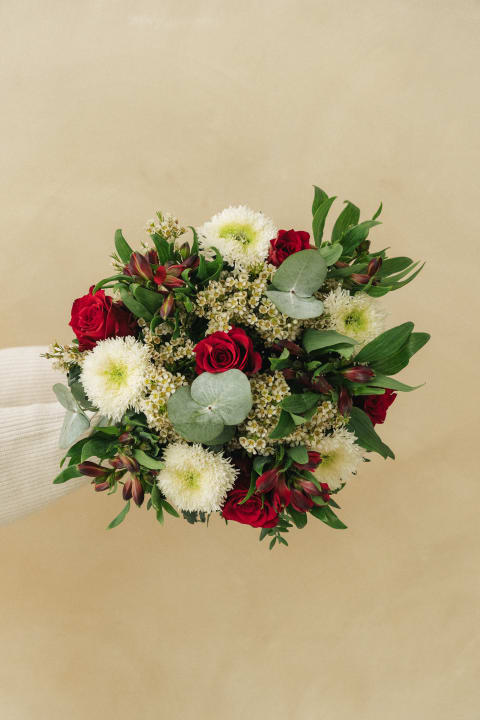
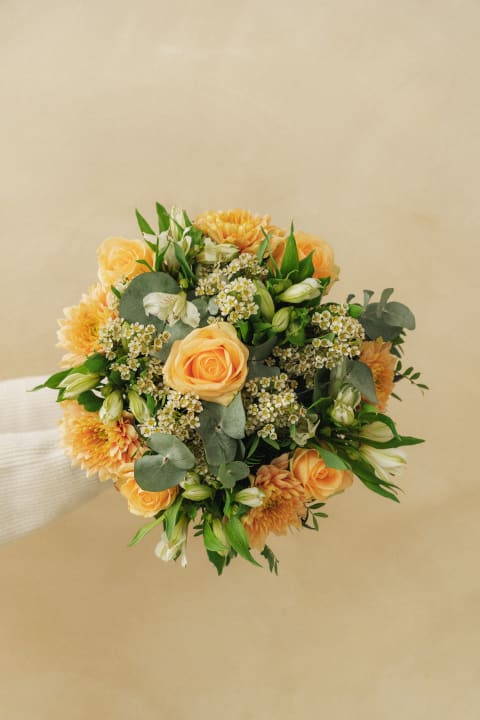
- Light, fresh colours. Soft pastels and whites, or cheerful yellows and oranges, suit a hospital room well.
- A short card. A few warm lines and your name are enough. The card is free from CHF 55 (CHF 2.90 below).
Delivery days and times
In the canton of Geneva, KANEL delivers the same day for orders placed before 2 pm, Monday to Saturday, in slots from 9 am to 8 pm. Elsewhere in Switzerland, order before 4 pm for next-day delivery, Tuesday to Saturday between 7 am and 6 pm, with an optional 9 am–12 pm slot for CHF 5 extra. There is no Sunday delivery, so for a weekend stay, aim for Friday or Saturday.
Browse the timeless bouquets for something calm and classic, or the seasonal range, and use KANEL5 for 5 % off. For a delivery that ends up going home instead, our guide to Swiss addresses and what happens when nobody is home will help.