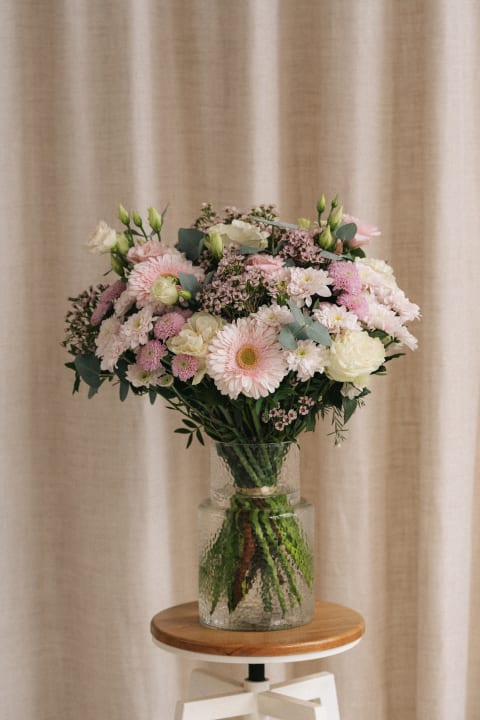
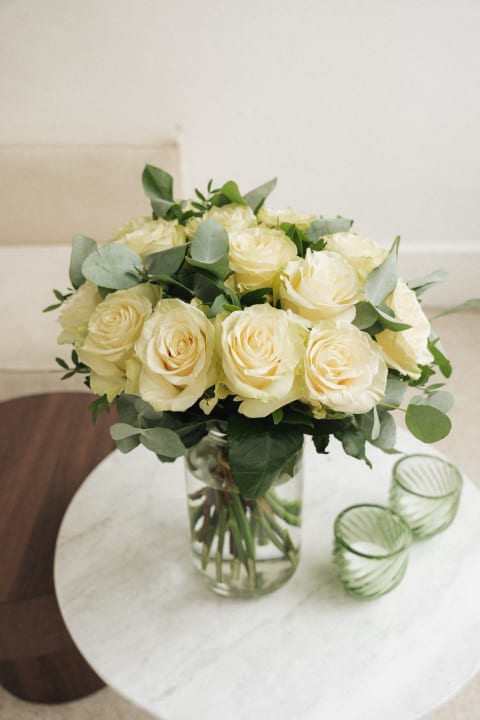
Sending flowers to Switzerland from another country comes down to four things: the Swiss clock, the delivery calendar, paying in Swiss francs and getting the address right. Get those four right and the rest is choosing a bouquet and writing the card.
This page walks through each step in the order you meet them. If you are ordering from a specific country, the country guides go further, with your local cut-off times, prices converted to your currency and the date of your Mother’s Day compared with the Swiss one:
1. Work on Swiss time
Every deadline is in Swiss time, whatever the clock on your screen says. Switzerland uses Central European Time (UTC+1) in winter and Central European Summer Time (UTC+2) from the last Sunday of March to the last Sunday of October. In 2027 that means clocks go forward on 28 March and back on 31 October.
There are two cut-offs to remember:
| Where the flowers go | Order by (Swiss time) | Delivered |
|---|---|---|
| Canton of Geneva | 2 pm | The same day, Monday to Saturday |
| Anywhere else in Switzerland | 4 pm | The next day, Tuesday to Saturday |
If you live in a country that changes its clocks on different dates from Switzerland, the gap between you and Swiss time shifts by an hour for a week or two in spring and autumn. North America moves earlier in March and later in autumn; Australia’s daylight saving runs the other way round entirely. The country pages give the exact weeks.
The live Swiss clock on this page is the quickest check. If it reads 3.45 pm and your recipient lives in Zurich, you still have fifteen minutes for tomorrow.
2. Pick the delivery date
Outside Geneva, deliveries run Tuesday to Saturday, between 7 am and 6 pm. You can add a morning slot (9 am to 12 pm) for CHF 5 if the timing matters, for example when someone leaves for work early. In the canton of Geneva, deliveries run Monday to Saturday in three slots: 9 am–2 pm, 2 pm–5 pm and 5 pm–8 pm.
There are no Sunday deliveries anywhere. That has a knock-on effect on the start of the week:
| You order (Swiss time) | Earliest delivery outside Geneva |
|---|---|
| Friday before 4 pm | Saturday |
| Friday after 4 pm, Saturday or Sunday | Tuesday |
| Monday before 4 pm | Tuesday |
| Monday after 4 pm | Wednesday |
So if a birthday falls on a Sunday or Monday, the usual choice is Saturday: the flowers arrive a day or two early and last well beyond the day itself.
You do not have to order at the last minute. The date can be chosen up to 14 days ahead, which is useful when you are travelling, when the occasion falls during a busy week at home, or when your time zone puts the cut-off in the middle of your night. The bouquet is still hand-tied in our Vernier workshop on the day of delivery, not on the day you place the order.
3. Pay in Swiss francs
Prices are in Swiss francs (CHF), VAT included, and you pay in CHF. You can use Visa, Mastercard, American Express or PayPal from abroad. (TWINT, the Swiss mobile payment app, is also accepted, but it is built around Swiss bank accounts, so it is mainly for people who live here.)
What happens next is up to your bank, not us:
- Your card issuer converts the amount from CHF into your currency at its own rate on the day the payment is processed. The figure on your statement may differ slightly from the one you worked out at checkout.
- Many cards add a foreign transaction fee on purchases in another currency. Some travel and online-bank cards do not. If you have a choice of cards, use the one without the fee.
- PayPal usually offers to do the conversion itself. That is convenient, but its rate may not match your card’s. If PayPal lets you choose, compare the two before you confirm.
- An international payment can trigger a fraud check. If your banking app asks you to approve a payment to a Swiss merchant, that is normal.
Since nothing crosses a border, the recipient never pays customs, duty or anything else on the doorstep. To give you an idea of the budget, the seasonal bouquets cost CHF 74.90, 94.90 and 124.90, and delivery outside Geneva is CHF 14.90. Each country page converts those figures into local currency, with the date of the exchange rate used.
4. Write the address the Swiss way
A Swiss address is short and precise, and two details catch people out. First, the house number comes after the street name: Bahnhofstrasse 12, not 12 Bahnhofstrasse. Second, the four-digit postcode comes before the town, on the last line: 8001 Zürich.
A typical address looks like this:
Anna Keller
Chemin des Vignes 7
1260 Nyon
A few things make delivery smoother:
- Use the name on the letterbox. In Swiss apartment buildings the courier finds the right door by the name on the bell and letterbox. If your recipient has a partner with a different surname, or lives in a shared flat, add both names or a “c/o”. Our guide to the name on the letterbox explains why this matters so much here.
- Check the postcode. It must match the town. Swiss Post publishes an official postcode directory if you are unsure.
- Add the recipient’s mobile number. It is the quickest way to reach them if the courier cannot find the entrance, and it is how they hear that flowers have arrived.
- Hospitals and offices need the ward or company name. Deliveries to hospitals go to the front desk; see sending flowers to a hospital or clinic.
Full examples, including flats and company addresses, are in how Swiss addresses work.
5. Write the card
A message card is free with every order from CHF 55 (CHF 2.90 below that), so in practice with any of our bouquets. You type the message at checkout and it travels with the bouquet.
Some things to keep in mind when writing from abroad:
- Sign with your full name if your recipient might not expect flowers from you, or if more than one person could be “Mum” or “Tom”. The courier hands over the bouquet, not an explanation.
- Say where you are, if it adds something: “From all of us in Toronto” tells a story that “Love, us” does not.
- English is fine. Switzerland has four national languages, and a message in English is perfectly normal. If your recipient is more comfortable in French, German or Italian and you know a short phrase, a line in their language is a lovely touch.
- Do not put the price or anything private that a neighbour or receptionist should not read if the card ends up being handed over by someone else.
For what is customary to say on different occasions, see flower-giving etiquette in Switzerland.
6. If the recipient is out
This is the question senders worry about most, and the answer is reassuring. If nobody answers, the bouquet is usually left at the door or in a safe place. It travels in a cardboard box with the stems in a water reservoir, so it keeps fresh while it waits. The recipient also gets a WhatsApp message saying flowers have arrived for them, which is why their mobile number is worth adding.
If you know they will be out all day, you can choose a date when they will be home, have the flowers sent to their workplace, or use the morning slot. Our page on what happens when nobody is home covers the details, including apartment buildings with a locked entrance.
7. Choose the bouquet
Every bouquet is hand-tied in Vernier on the day it is delivered. There are three families:
- Seasonal bouquets (CHF 74.90, 94.90, 124.90) change every week with the best stems available. They are a safe choice for almost any occasion.
- Timeless bouquets (from CHF 64.90), a more classic line.
- Rose bouquets (from CHF 89.90) for love, anniversaries and big apologies.
Each comes in three sizes. If you are unsure, the middle size of the seasonal bouquets looks generous without being overwhelming in a small flat, and from CHF 90 a KANEL tote bag is included. Our seasonal bouquets guide shows the current range.
Use the code KANEL5 at checkout for 5 % off your order.
Need help?
If something about an address or a date is unclear, write to hello@kanel.ch or send a WhatsApp message to +41 78 243 18 69 before you order. It is much easier to sort out a doubtful postcode in advance than after the courier has set off.
In this section
 United KingdomSwitzerland is only an hour ahead and a short flight away, but the address is written differently, you pay in francs and Mother's Day falls two months later. Here is what changes when you order from Britain.
 United StatesThe Swiss deadline falls in your morning, the clocks change on different weekends and the address runs the other way round. Here is how to time and address an order from the US so it lands on the right day.
 CanadaFrom Halifax to Vancouver, the Swiss deadline lands somewhere between your breakfast and your alarm clock. Here is how to time, pay for and address an order from Canada, in English or in French.
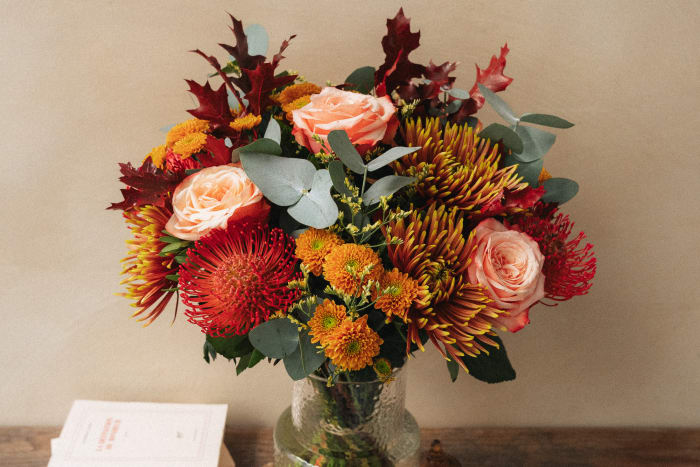 AustraliaWhen it is bedtime in Sydney, the Swiss working day is in full swing. That turns out to be good news: the deadline falls in your evening, so you can order after dinner for delivery the next Swiss day.
 GermanyLiving in Germany with family or friends across the border in Switzerland? Same time zone, a familiar address format, but a different currency and a few details that are easy to miss.
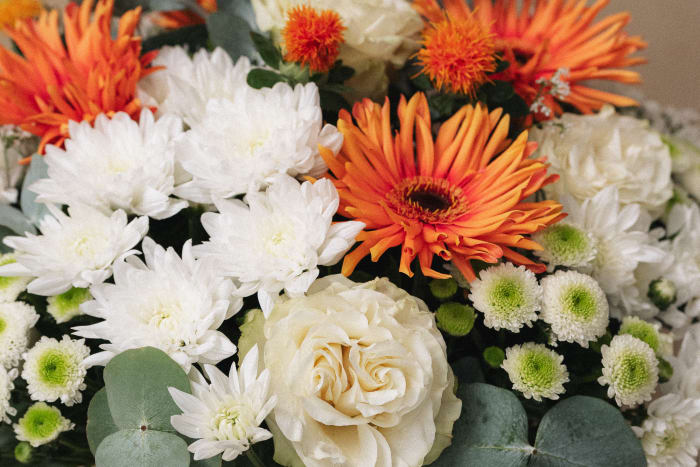 FranceWhether you live in Paris or ten minutes from Geneva, sending flowers into Switzerland means a different currency, a different address order and, every spring, a different Mother's Day.